
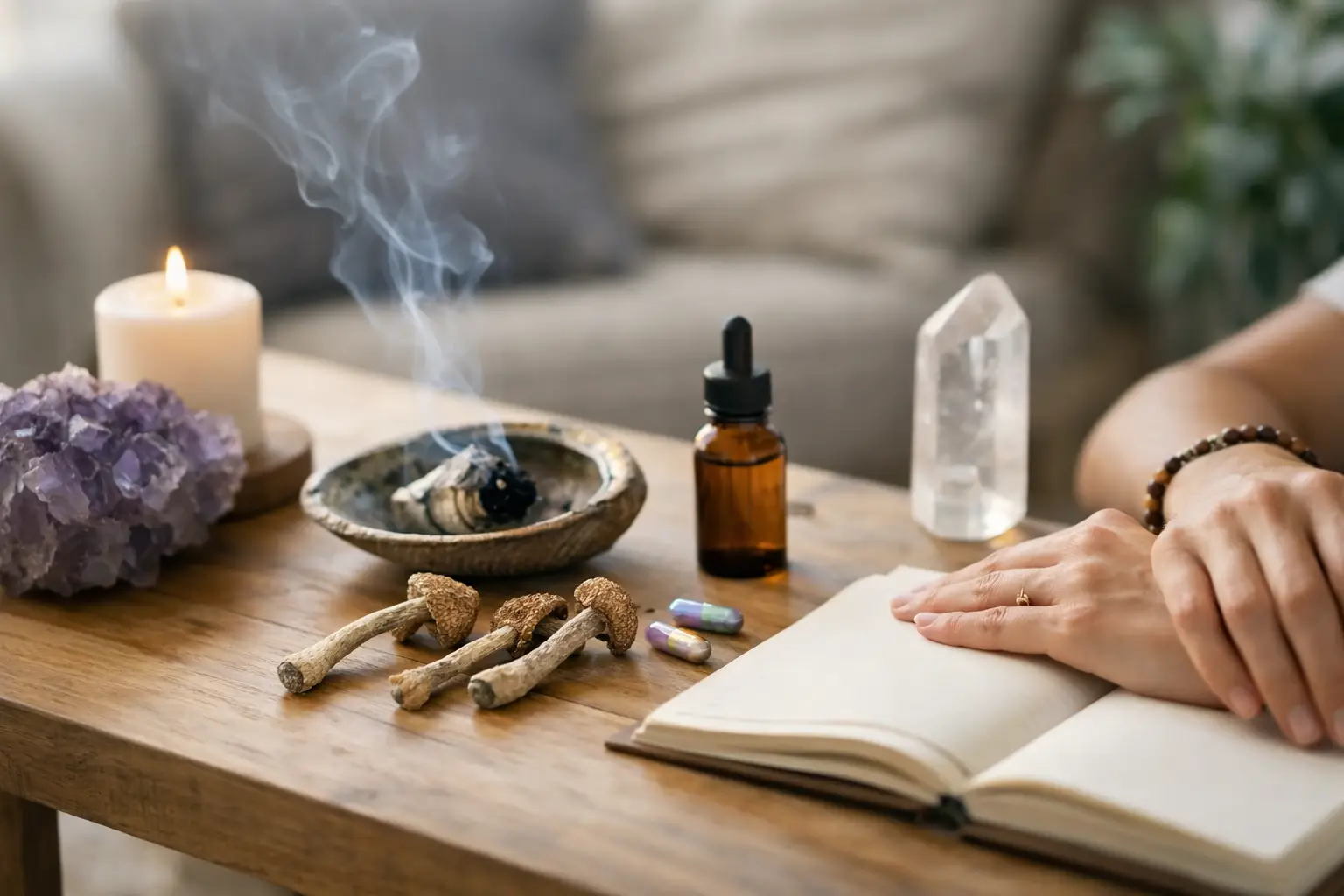
A psychedelic experience can bring forward powerful emotions, memories, body sensations, images, and questions. Learning how to prepare for psychedelics is not about controlling every outcome. It is about creating enough safety, clarity, and support to meet whatever arises with greater care.
Preparation matters because expanded states can amplify what is already present. This may include curiosity and hope, but also grief, anxiety, unresolved trauma, relational pain, or uncertainty about who you are becoming. Your experience is worth exploring, and it deserves more than a last-minute plan.
How to prepare for psychedelics begins with an honest check-in
Before making plans, pause and ask what is drawing you toward this experience now. You may be seeking relief, insight, connection, or a different perspective on a difficult period. These are understandable hopes. At the same time, a psychedelic experience is not a predictable treatment, shortcut, or guarantee of healing.
Consider whether you are currently in a relatively stable place in your life. Acute crisis, severe sleep disruption, escalating substance use, recent loss, intense relationship conflict, or major life instability can make it harder to process an already demanding experience. This does not mean you have failed or are somehow not ready. It may simply mean that more support, rest, or time is needed first.
It can help to write down your intentions in simple language. Rather than asking an experience to solve your life, try questions such as: What am I ready to notice? What pattern has been asking for my attention? What would it mean to approach myself with more honesty and compassion? An intention is a gentle orientation, not an assignment you must complete.
Consider physical and mental health carefully
Psychedelics are not appropriate for everyone, and responsible preparation includes medical and psychiatric screening. A personal or family history of psychosis, schizophrenia, bipolar disorder, mania, or certain severe mental health conditions may increase risk. So can some medications, health conditions, and combinations of substances.
Speak with a qualified prescribing clinician or other appropriate health professional about your individual circumstances, especially if you take psychiatric medication, have a heart condition, are pregnant or nursing, or have experienced periods of mania, psychosis, or dissociation. Do not stop or change prescribed medication on your own in anticipation of an experience.
Legal status also varies by location and setting. Knowing the law where you live and choosing not to place yourself in avoidable legal or professional jeopardy are practical parts of care. Preparation is not only emotional or spiritual. It includes the real conditions of your body, responsibilities, and life.
Choose the setting and support with discernment
The environment around an experience can shape how safe and manageable it feels. Consider whether the setting is physically comfortable, private, calm, and free from demands such as driving, work obligations, caregiving, or unexpected visitors. Plan for sufficient time afterward to rest rather than expecting to return immediately to ordinary tasks.
Who is present matters just as much. A trusted, sober support person should be emotionally steady, respectful of boundaries, and able to respond calmly if difficult feelings emerge. They should not pressure you to disclose, perform insight, take more of a substance, or interpret your experience for you.
If you are participating in a facilitated or clinical setting, ask direct questions beforehand. Clarify the facilitator’s training, emergency procedures, confidentiality practices, screening process, boundaries around touch, and approach to trauma responses. A caring provider welcomes these questions. Vague reassurance is not a substitute for clear safety practices.
It is also wise to have a practical safety plan. Let a trusted person know where you will be, arrange transportation that does not involve driving while impaired, and know how to access urgent medical help if needed. If someone becomes confused, severely agitated, unsafe, or has concerning physical symptoms, seek emergency assistance.
Make room for difficult material
People sometimes prepare only for beauty, connection, or relief. Yet intense fear, grief, shame, anger, or old memories can also arise. A difficult experience is not necessarily harmful, nor is it automatically meaningful. What matters is whether there is enough support and capacity to stay oriented and respond with care.
Trauma-aware preparation recognizes that the nervous system may move into fight, flight, freeze, collapse, or dissociation under stress. It can be useful to practice grounding before any expanded-state experience: noticing your feet on the floor, naming objects in the room, feeling the support of a chair, lengthening an exhale, or placing a hand over your chest if that feels comfortable.
These are not techniques for forcing yourself through something overwhelming. They are ways of building familiarity with returning to the present. If you tend to dissociate, panic, or lose a sense of safety when strong feelings arise, discussing this with a trauma-informed therapist beforehand may be especially helpful.
Plan for the days after, not only the day itself
Preparation continues beyond the experience. Insights can feel clear in the moment and become confusing, emotionally charged, or difficult to apply afterward. You may feel tender, energized, tired, open, unsettled, or disappointed. There is no single correct response.
Leave room in your schedule for sleep, nourishing food, gentle movement, quiet, and reduced stimulation. Avoid making major relationship, financial, career, or identity decisions immediately afterward. An experience may offer valuable material, but its meaning often develops slowly. What feels absolute at first may need time, context, and reflection.
Journaling can help you remember images, emotions, dreams, and questions without requiring you to interpret them immediately. Notice what stays with you over several days or weeks. Perhaps a recurring image points toward grief that needs attention. Perhaps a strong emotional response highlights an old relational pattern. Perhaps nothing feels clear yet. Uncertainty can be part of the process.
Seek integration support when you need a steady container
Integration is the process of making sense of an experience and translating what matters into daily life. It is not about turning every sensation into a message or adopting someone else’s interpretation. It is a space to meet yourself at a deeper level, with curiosity and appropriate skepticism.
A therapist can help you explore what this experience may be asking you to notice while staying connected to your relationships, work, body, values, and responsibilities. This may include processing fear or grief, understanding symbolic imagery, working with dreams, recognizing unconscious patterns, or finding small, sustainable changes that reflect what you learned.
Professional support can be particularly valuable if an experience leaves you distressed, disconnected, unable to sleep, preoccupied by frightening thoughts, or uncertain about what is real. You do not need to carry confusing material alone. Online counseling can offer a confidential, paced place to speak about what happened without pressure to make it sound profound or positive.
At Gaia Counselling, psychedelic preparation and integration are approached as thoughtful therapeutic work, not as an endorsement of psychedelic use. The focus is on emotional safety, informed reflection, and the practical meaning of your inner experience.
The most careful preparation may be the willingness to slow down. Whether you decide to move forward, postpone, or choose a different path entirely, listening closely to your limits is not avoidance. It is a meaningful way of caring for yourself.